My Blog List

Monday, June 19, 2017

Tomb Raider 2013 Free Download

Tomb Raider 2013 Free Download

Tomb Raider is an action-adventure video game developed by Crystal Dynamics and published by Square Enix. Tomb Raider is the tenth title in the Tomb Raider franchise, and operates as a reboot that emphasises the reconstructed origins of Lara Croft. Tomb Raider was released on 5 March 2013 for Microsoft Windows, PlayStation 3 and Xbox 360,


Story->
The game begins with Lara setting out on her first expedition aboard the ship Endurance, with the intention of finding the lost kingdom of Yamatai. By her suggestion and against Whitman's advice, the expedition ventures into the Dragon's Triangle, east of Japan. The ship is struck by a violent storm and shipwrecked, leaving the survivors stranded on an isolated island. Lara is separated from the others and captured by a strange, savage man. She manages to escape while her captor is killed as the cave collapses due to her actions.

GamePlay->
omb Raider is presented in third-person perspective. Players take control of the series lead character Lara Croft. The game uses an interconnected hub-and-spoke model that combines action-adventure, exploration, and survival mechanics. Players can traverse between the camps and across the island using footpaths, improvised or already-available ziplines and climbable tracks. Many of the players moves are carried over from the previous games created by Crystal Dynamics, with some tweaks added, such as incorporating elements of stealth gameplay. Quick Time Events are scattered at regular intervals throughout the game, often appearing at crucial or fast-moving points in the game's plot, such as extracting a shard of metal, and escaping a collapsing cave.

Rating & Release->
Tom Raider 2013 was released 5 March 2013 for PC version this game is released for many platform like PlayStation 4, Xbox One, PlayStation 3, Xbox 360, Microsoft Windows, Linux, Pocket PC. 
This game rating also awesome IGN rating 9.1/10 and GamesPot 8.5/10 so according to rating this game is awesome watch some screenshot below


Tom Raider Minimum System Requirements 


  • Operating System: Windows 98/ Windows XP/ Windows 7/ Windows 8 & Windows 10
  • Ram: 2 GB  Memory
  • Processor: Dual core CPU (AMD Athlon64 X2 2.1 Ghz (4050+)/Intel Core2 Duo 1.86 Ghz (E6300)
  • Hard Drive:  At least 10 GB free hard drive
  • Video Memory:  DirectX 9 Graphics card with 512 MB Video RAM (Radeon HD 2600 XT/Geforce 8600)
  • Sound Card: Direct X 9.0c compatible sound card
  • Mouse and Keyboard

Tom Raider Minimum Recommended Requirements 

  • Operating System: Windows 98/ Windows XP/ Windows 7/ Windows 8 & Windows 10
  • Ram: 4 GB Memory
  • Processor: Quad core CPU (AMD Phenom II x2 565/Intel Core i5-750)
  • Hard Drive: 12 GB at least free hard drive
  • Video Memory: 1 GB Of video Ram
  • Sound Card: Direct X 9.0c compatible sound card
  • Mouse and Keyboard

Tom Raider Screen Shots


Game File Size->  6.3 GB

Game File Password->  www.pcgamespunch.com


Hulk 2003 Highly Compressed Pc Game 163 Mb

Hulk 2003 Highly Compressed Pc Game 163 Mb

Bruce Banner, a bionuclear researcher encounters a fatal accident in his laboratory. Life changes thereon, when his anger transforms him into an endangering green monster.
This hulk game was released in 2003 and now I am providing this game with high compressed file in 163 MB file .


System Requirement for Hulk 2003


  • These game runs all operating system like windows 7,8,10,XP,Vista Etc
  • Processor pentium 3 or amd E1
  • 192 MB RAM memory
  • 1.5 GB hard drive 
  • keyboard mouse 
  • Directx 8


Screenshots


How to install Hulk 2003


download winrar and open the game with winrar and extract game when you will extract this will ask for password then enter apunkagames . Now extract your game anywhere you want in your computer and play after extracted .


Game Size -> 163 MB
Password -> apunkagames


Screen Shot

View Download


Sunday, May 21, 2017

Constantly Changing SEO


The Competitive Nature of Search Engines
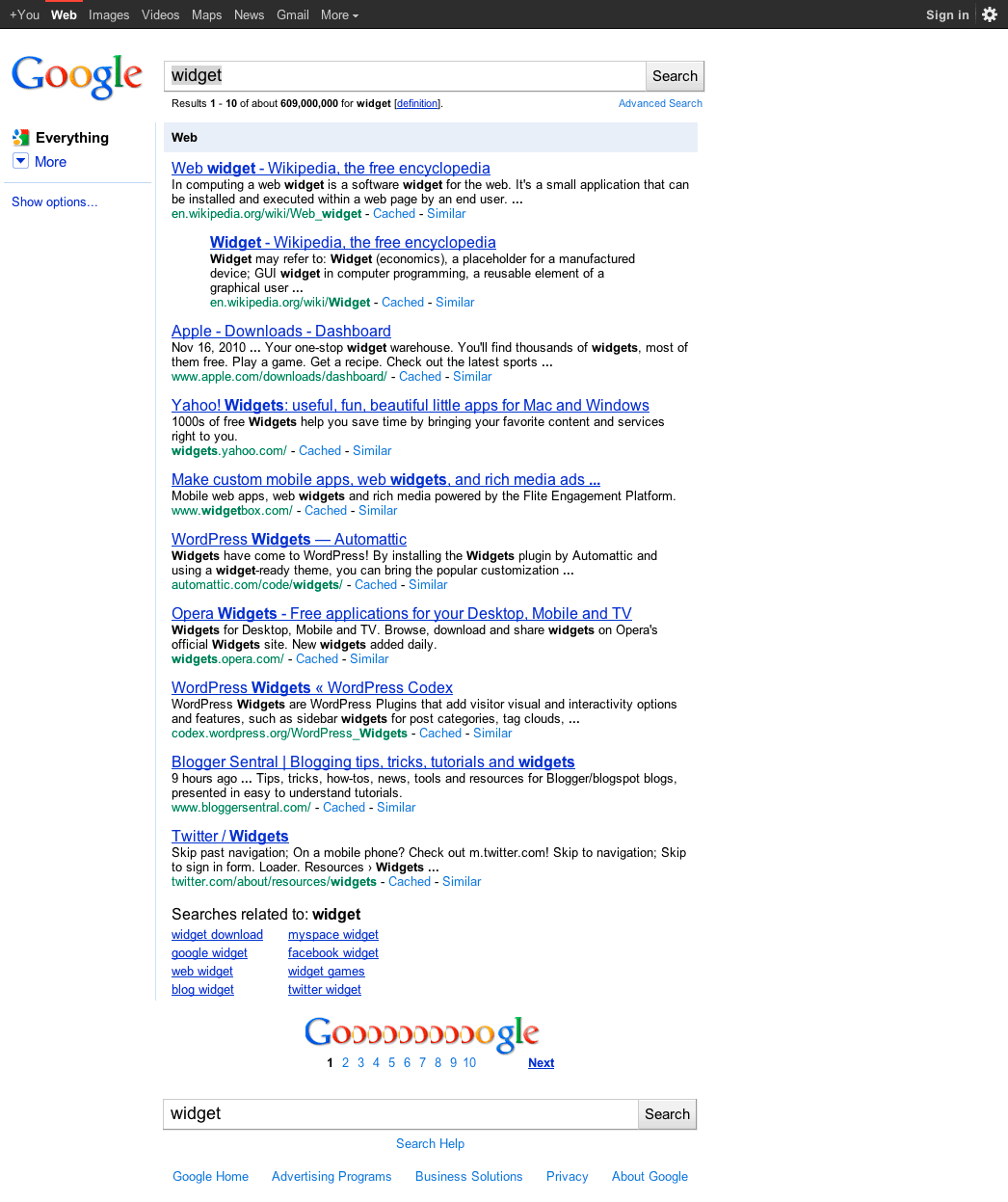
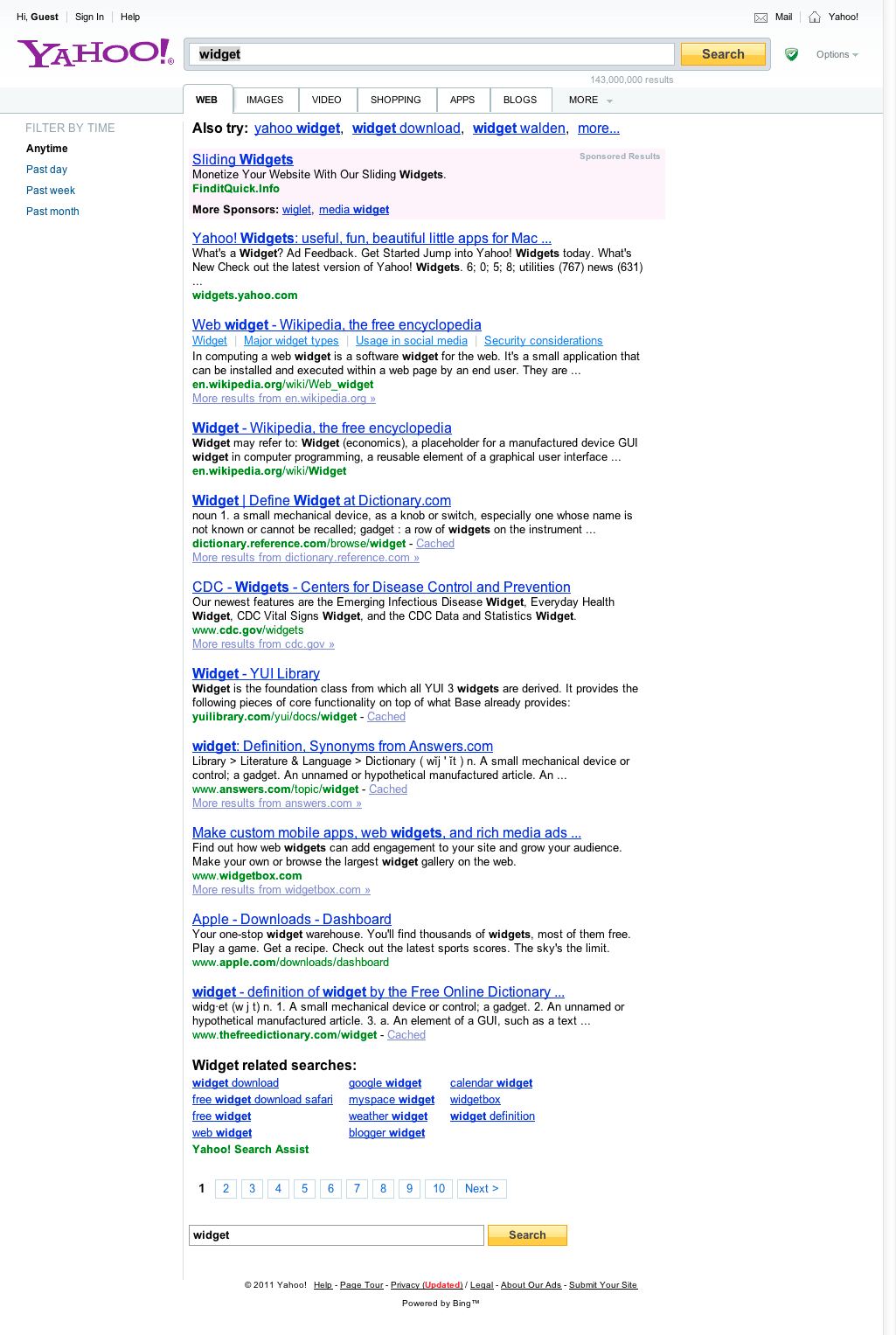
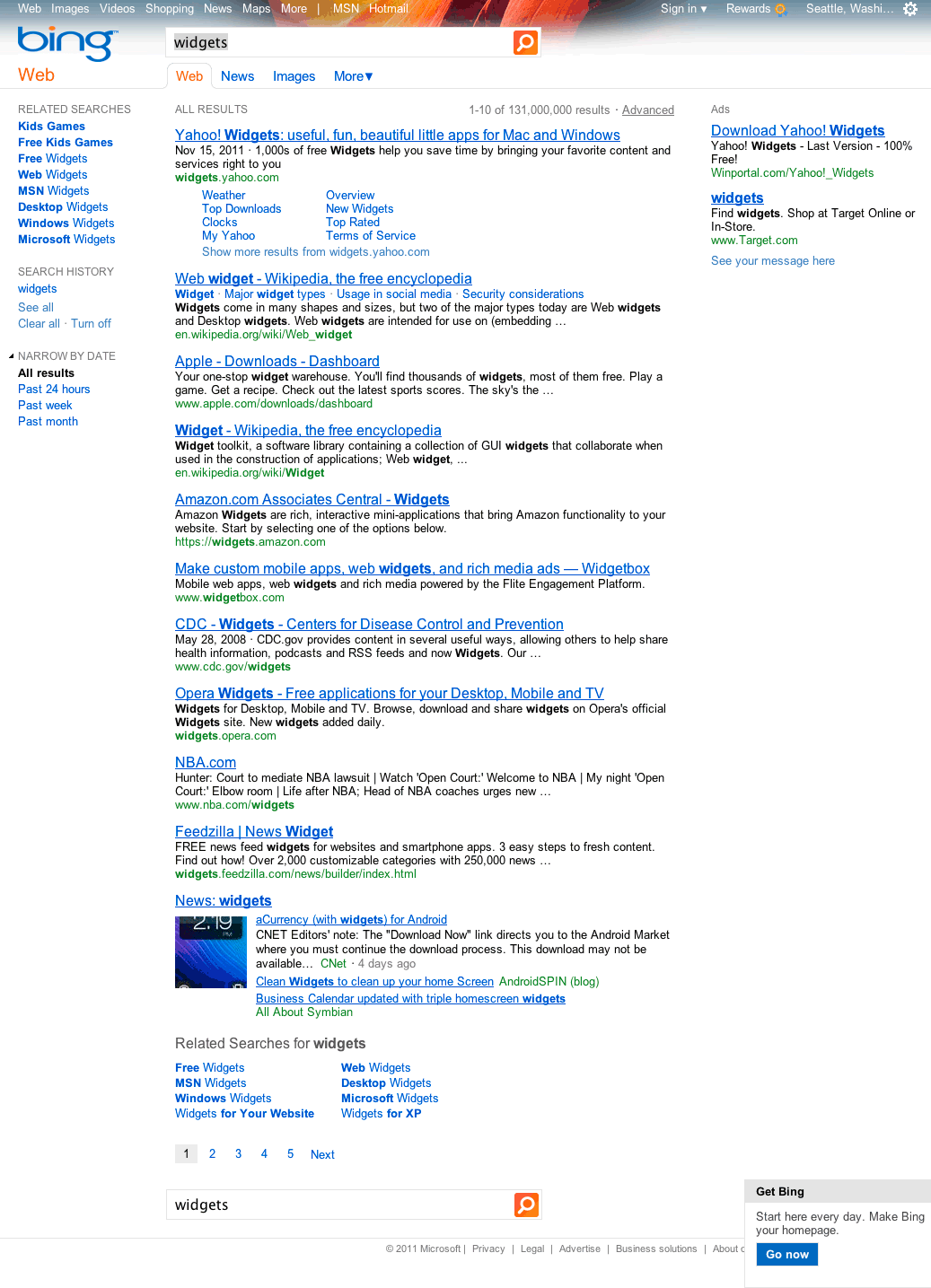
Take a look at any search results page and you'll find the answer to why search marketing has a long, healthy life ahead.
Google Screenshot Yahoo Screenshot Bing Screenshot
There are, on average, ten positions on the search results page. The pages that fill those positions are ordered by rank. The higher your page is on the search results page, the better your click-through rate and ability to attract searchers. Results in positions 1, 2, and 3 receive much more traffic than results down the page, and considerably more than results on deeper pages. The fact that so much attention goes to so few listings means that there will always be a financial incentive for search engine rankings. No matter how search may change in the future, websites and businesses will compete with one another for this attention, and for the user traffic and brand visibility it provides.

Constantly Changing SEO

When search marketing began in the mid-1990s, manual submission, the meta keywords tag, and keyword stuffing were all regular parts of the tactics necessary to rank well. In 2004, link bombing with anchor text, buying hordes of links from automated blog comment spam injectors, and the construction of inter-linking farms of websites could all be leveraged for traffic. In 2011, social media marketing and vertical search inclusion are mainstream methods for conducting search engine optimization. The search engines have refined their algorithms along with this evolution, so many of the tactics that worked in 2004 can hurt your SEO today.
The future is uncertain, but in the world of search, change is a constant. For this reason, search marketing will continue to be a priority for those who wish to remain competitive on the web. Some have claimed that SEO is dead, or that SEO amounts to spam. As we see it, there's no need for a defense other than simple logic: websites compete for attention and placement in the search engines, and those with the knowledge and experience to improve their website's ranking will receive the benefits of increased traffic and visibility.


➤To Chapter 4 ⏪

Written by  and Moz Staf

An important aspect of SEO is making your website easy for both users and search engine robots to understand. Although search engines have become increasingly sophisticated, they still can't see and understand a web page the same way a human can. SEO helps the engines figure out what each page is about, and how it may be useful for users.

Why Search Engine Marketing is Necessary
An important aspect of SEO is making your website easy for both users and search engine robots to understand. Although search engines have become increasingly sophisticated, they still can't see and understand a web page the same way a human can. SEO helps the engines figure out what each page is about, and how it may be useful for users.

A Common Argument Against SEO

We frequently hear statements like this:
"No smart engineer would ever build a search engine that requires websites to follow certain rules or principles in order to be ranked or indexed. Anyone with half a brain would want a system that can crawl through any architecture, parse any amount of complex or imperfect code, and still find a way to return the most relevant results, not the ones that have been 'optimized' by unlicensed search marketing experts."

But Wait ...

Imagine you posted online a picture of your family dog. A human might describe it as "a black, medium-sized dog, looks like a Lab, playing fetch in the park." On the other hand, the best search engine in the world would struggle to understand the photo at anywhere near that level of sophistication. How do you make a search engine understand a photograph? Fortunately, SEO allows webmasters to provide clues that the engines can use to understand content. In fact, adding proper structure to your content is essential to SEO.
Understanding both the abilities and limitations of search engines allows you to properly build, format, and annotate your web content in a way that search engines can digest. Without SEO, a website can be invisible to search engines.

The Limits of Search Engine Technology

The major search engines all operate on the same principles, as explained in Chapter 1. Automated search bots crawl the web, follow links, and index content in massive databases. They accomplish this with dazzling artificial intelligence, but modern search technology is not all-powerful. There are numerous technical limitations that cause significant problems in both inclusion and rankings. We've listed the most common below:

Problems Crawling and Indexing

  • Online forms: Search engines aren't good at completing online forms (such as a login), and thus any content contained behind them may remain hidden.
  • Duplicate pages: Websites using a CMS (Content Management System) often create duplicate versions of the same page; this is a major problem for search engines looking for completely original content.
  • Blocked in the code: Errors in a website's crawling directives (robots.txt) may lead to blocking search engines entirely.
  • Poor link structures: If a website's link structure isn't understandable to the search engines, they may not reach all of a website's content; or, if it is crawled, the minimally-exposed content may be deemed unimportant by the engine's index.
  • Non-text Content: Although the engines are getting better at reading non-HTML text, content in rich media format is still difficult for search engines to parse. This includes text in Flash files, images, photos, video, audio, and plug-in content.

Problems Matching Queries to Content

  • Uncommon terms: Text that is not written in the common terms that people use to search. For example, writing about "food cooling units" when people actually search for "refrigerators."
  • Language and internationalization subtleties: For example, "color" vs. "colour." When in doubt, check what people are searching for and use exact matches in your content.
  • Incongruous location targeting: Targeting content in Polish when the majority of the people who would visit your website are from Japan.
  • Mixed contextual signals: For example, the title of your blog post is "Mexico's Best Coffee" but the post itself is about a vacation resort in Canada which happens to serve great coffee. These mixed messages send confusing signals to search engines.

Make sure your content gets seen

Getting the technical details of search engine-friendly web development correct is important, but once the basics are covered, you must also market your content. The engines by themselves have no formulas to gauge the quality of content on the web. Instead, search technology relies on the metrics of relevance and importance, and they measure those metrics by tracking what people do: what they discover, react, comment, and link to. So, you can’t just build a perfect website and write great content; you also have to get that content shared and talked about.


Read more »

Total Pageviews